 +44 7933 142807
 info@assignmentmaster.org.uk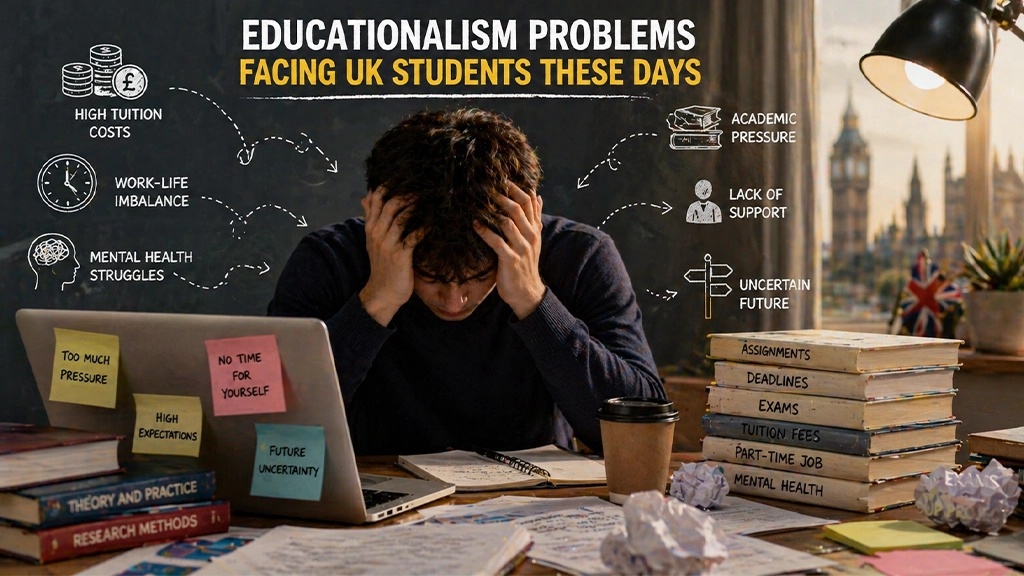
 By
By Every year, 500,000 international students decide to study in the UK. With its top universities, world-class innovative teaching, and post-study work opportunities, etc., the UK has become one of the top destinations for higher education.
Also, many students aspire to study in the UK as it is a once-in-a-lifetime opportunity that will change their lives completely. However, the UK education system also involves some challenges: structural inequality, attainment gap, budget cuts, and a lack of teachers. Also, its education system continually evolves due to changing policies and the increased demand of students for SEND support.
If you want to know about the UK educational problems, then this blog will help you.
How does the UK education system work?
The UK education system has four main phases:
- Primary education: this includes key stage 1 and key stage 2. It is the first formal phase of schooling from 4 years to 11 years.
- Secondary education: this includes key stage 1 and key stage 2 for children between 11 and 16 years.(gsce exams)
- Further education: it is usually for students between 16 and 18 years. This stage involves A-Level qualifications, vocational courses, or apprenticeships.
- Higher education: it includes the university level, including undergraduate or postgraduate studies for students above 18 years.
Moreover, the education system of the UK also varies in terms of different regions: England, Scotland, Wales, and Northern Ireland. They have their own curricula, examination systems and structures.
What are the current issues and problems in education in the UK?
Funding constraints
The major educational problem in the UK is underfunding. They have faced severe budget constraints over the past decade, due to which they have taken some serious decisions. Moreover, the funding may appear sufficient on paper, but with the rising costs of energy bills, staff salaries and resources, they can not afford what they need.
Institute for Fiscal Studies (2024) found UK schools operated with £2 billion less funding in real terms compared to 2015, declining the per-pupil spending over the past decade.
The consequences are: increased class sizes, strain on resources, reduced school weeks, increased staff hours with additional duties, reduced curriculum and limited access to technology.
Moreover, the per pupil sending is directly linked with attainment outcomes. It shows that underfunding affects educational standards.
- Due to the downsizing of staff, the remaining staff had to take on additional duties, with their working hours increasing to 55 hours per week. Due to the workload, they want to quit this job
- Underfunding also leads to limited access to technology more severely. This is because children who are not financially stable have to face inequality. This is because in the modern world, not having an internet connection or a laptop will restrict your opportunities.
Therefore, the UK government should provide enough funding to the state schools so they can cater to the needs of all types of students and their diverse learning needs.
Teacher shortages and burnout
Teaching has always been a respectable and demanding profession. However, this job has lost its charm in the UK and has become challenging. UK schools are unable to recruit and retain staff. The reason?
High workloads, burden and low salaries. All of these factors are pushing teachers to leave this field. This staff shortage created a cycle of larger class sizes and additional duties for them. It leads to more burnout. Also, students suffer due to reduced attention and individualised support.
Educational inequality and the attainment gap
The differences in the financial states of students also impact their education. This is another education challenge in the UK with obvious differences in the performance, university admissions and career opportunities of students from underprivileged and privileged backgrounds.
- Privileged background students have access to private schools and additional learning resources.
- Underprivileged background students face many barriers in terms of food insecurity, poor housing, and limited access to technology.
Some students have access to technology and high-speed internet, while others do not even have access to basic devices, creating a digital divide that hinders learning. It also leads to the absence of students from low-income backgrounds because they also have to earn for basic necessities, and they also suffer from having nothing to eat during school hours.
Also, the schools in more poverty-stricken areas have to suffer more due to the budget cuts by the government.
Therefore, the UK government must work hard and ensure fair and equal opportunities for students regardless of their socioeconomic background. Otherwise, the large number of youth would drop out, not earn enough and ultimately serve as a demographic bomb.
Another major issue of the UK’s hnc education helping system is that where you study primary and secondary education influences where you would study your compulsory education; however, the students studying in elite schools are able to get into Oxford and Harvard, while students from mediocre schools aren’t able to get into such universities, as a result, it also impacts their future career and their earning potential.
A good example is that people mainly in power in the UK have studied at such universities(31 out of 58 UK prime ministers have studied at Oxford University). It shows that people born in a privileged background and areas have access to well-resourced education.
Mental health problems among students
Mental health problems such as depression, stress and anxiety are also a growing challenge in the UK educational context. The major causes may be the academic pressure, discrimination, bullying and uncertainty about the future.
Schools are expected to resolve these educationalism problems with personalised interventions, but there is a lack of staff and resources for it.
Also, some UK schools are unable to provide support for students with SEN. This is also due to underfunding.
Inclusive education is crucial, but it requires practical investment.
Use of technology
Students now have access to online resources, virtual classrooms and interactive learning tools. This is due to the technological advancements in the educational setting.
However, the challenges of over-reliance on technology are less physical interaction between teachers and students, online distractions, cyberbullying etc.
Other challenges are: outdated curriculum, AI, and lack of inclusivity.
What’s the way forward?
- Investing sufficient funding in education.
- Improvement in the teacher recruitment and retention.
- Expanding the mental health support services in schools.
- eliminating the digital divide to ensure equal access to technology.
- Strengthening support for SEN students through specialised training.
Education is not only about the academic success of students, but also about the welfare of the students and addressing their concerns. Moreover, the government, teachers, students and parents must engage and work together to resolve these challenges.
All in all!
The UK education system seems to be beneficial for those born in privileged areas and wealthy families. This is because educational inequalities between the students have highlighted this issue. It affects where they study and how underfunding impacts their quality of education. Targeted intervention is needed to address the issues of disadvantaged students to reduce attainment gaps and ensure inclusive learning for all.
There are many other educational problems, such as mental health problems, the impact of technology and teacher shortages. Each of these problems needs to be tackled to turn the unfair and discriminatory UK education system into an inclusive and fair one.
Lastly, a nation’s success is determined by its ability to educate its people.
FAQs:
What is the 70 30 rule in teaching?
The 70 30 rule in teaching is a student-centred pedagogical framework. Students actively engage 70% of the time, while the teacher facilitates for only 30%
What are the top 5 educational problems these days?
The top 5 educational problems are outdated curriculum, teacher shortages, inadequate access to technology, mental health concerns and educational inequality.
What are the current educational issues in the UK?
The current educational issues in the UK are: high absenteeism, a worsening mental health crisis among students, a failing Special Educational Needs and Disabilities (SEND) system, Poverty-driven dropouts, and rural school funding shortages.
What types of problems do students face in the UK?
The problems students face in the UK are: Financial pressures, mental health problems, cultural shock, language barrier, and digital divide.
What is the biggest issue facing education today?
The biggest issues facing education are: systemic poverty preventing access, conflict disrupting schooling for millions, and poor quality learning outcomes
What are 5 barriers to learning in education?
The 5 barriers to learning in education are: financial constraints, fear of failure, lack of motivation, cognitive/learning disabilities, and poor foundational knowledge.


 Live Chat
Support
Live Chat
Support +44 7933 142807
 info@assignmentmaster.org.uk