 +44 7933 142807
 info@assignmentmaster.org.uk
 By
By If you are wondering whether a CIPD qualification in 2026 matters, let me tell you it does. As a matter of fact, it is an established way to step into HR or learning and development (L&D) professions.
Whether you are planning to start with CIPD level 3 or planning for CIPD level 7 to move forward with your career, the CIPD qualification can enhance your skills, distinguish you from other professionals in the competitive HR landscape, and increase your income potential.
When you enrol in the CIPD qualification, you move forward step by step, gaining the expertise and knowledge required and expected in the current industry landscape.
Employers all around the globe consider the CIPD qualification as a benchmark for people professionals. If you are thinking whether CIPD qualifications are worth the time and investment, then this blog will remove all your doubts. Let’s begin.
What is the CIPD Qualification?
The Chartered Institute of Personnel and Development is the professional body for HR and people development that is recognised globally. It offers internationally recognised certification, i.e., CIPD qualification. It has over 160,000 members globally. Moreover, this qualification sets industry standards and promotes career progression at every stage. This qualification serves as a premier benchmark for excellence in HR and L&D careers.
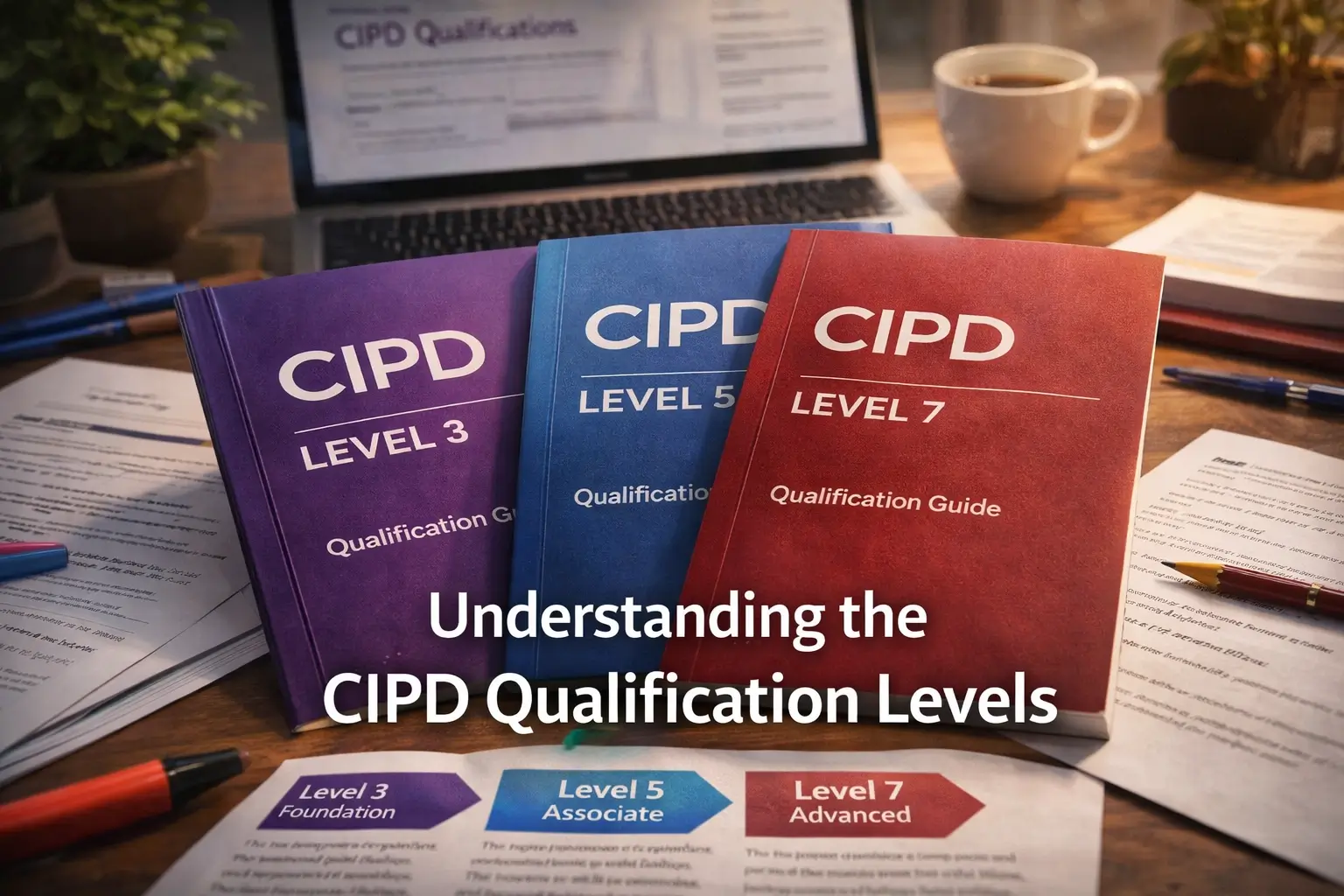
Also, these qualifications are designed in alignment with the CIPD profession map to help professionals at every level of their career, from beginners to experienced professionals. Moreover, this qualification is structured into 3 levels level 3 (foundation), level 5 (associate), and level 7 (advanced).
Understanding the CIPD Qualification levels
CIPD Level 3 Foundation Certificate in People Practice
CIPD level 3 is a foundation certificate that is an entry-level qualification. It is suitable for those who are just beginning their career in HR or L&D. Moreover, it doesn’t require any experience or skills. In terms of difficulty level, it is equivalent to A levels. The areas covered in this qualification are
essential behaviours for people professionals, the essentials of people practice, and the principles of using analytics. It equips individuals with skills needed for entry-level roles such as HR Assistant or Administrator.
CIPD Level 5 Associate Diploma in People Management
CIPD Level 5 Assignment Writers is an associate diploma or intermediate-level HR qualification. This qualification is designed for individuals with mid-level experience or an HR degree who want to progress towards more senior positions, such as HR Advisor or Consultant. The basic requirement for this level of qualification is the successful completion of the level 3 foundation certificate. It covers areas like employee engagement, talent Management, recruitment, employment law and performance improvement.
CIPD Level 7 Advanced Diploma in People Management
CIPD level is the advanced diploma and the most complex level of qualification. It is basically designed for people who have completed their CIPD level 3 and CIPD level 5 qualifications or have experience in senior, decision-making roles. This qualification covers areas like organisational development, decision-making, business strategy, leadership skills, business research and analysis etc. Moreover, it equips individuals with skills needed for roles like Head of HR, Director of People, HR Business Partner, or Talent Manager.
Two other diplomas are the CIPD Level 5 Associate Diploma in Organisational Learning & Development and the CIPD Level 7 Advanced Diploma in Strategic Organisational Learning & Development.
Which CIPD level is ideal for me?
CIPD Level 3
Suited for beginners, individuals with no experience, career changers or entry-level roles.
Job roles HR Assistant, Administrator, Trainer, L&D Assistant
CIPD level 5
Suited for individuals with an HR experience, a degree or a CIPD level 3 qualification.
Job roles HR Advisor/Manager, L&D Manager, People & Culture roles
CIPD level 7
Suited for individuals with a CIPD level 5 qualification, Senior HR/L&D pros aiming for leadership roles.
Job roles HR Business Partner, HR Director, People Strategy Lead, L&D Director
Why is the CIPD qualification crucial in 2026?
In the competitive HR landscape, experience is not enough. You must also have a CIPD qualification to show your skills and commitment to professional standards.
Many organisations are struggling due to problems like resignations, lower wage growth etc. Therefore, organisations now search for skilled HR professionals who can handle and manage the workforce properly.
Moreover, if an individual has completed the CIPD qualification from CIPD level 3 to CIPD level 5, then it reflects the credibility leading to the career stability of that individual.
Even in 2026, a CIPD qualification is the standardised way to progress in the HR and L&D careers. This is because it shows that you are highly qualified, skilled, knowledgeable and capable of tackling the modern-day workplace challenges. Also, this qualification will not only help you in getting a job but also equip you with important skills.
The major benefits of the CIPD qualification in 2026
Important requirement for hiring and advancement
CIPD qualification is the most commonly requested certification in HR job postings( as a standard for mid-to-senior level roles).
Significant salary and career boost
CIPD-qualified staff can earn 12% more than those without a CIPD qualification. Moreover, the CIPD qualification provides a structured path from entry-level HR (Level 3) to managerial and strategic roles (Levels 5 and 7). Also, HR admin-level roles that require CIPD qualification pay 24% more than those who don’t, and HR manager-level roles that require Chartered CIPD membership pay upto up to £17,200 more.
Globally recognised
The CIPD qualification is recognised globally. Therefore, if you have completed all the CIPD qualifications, then you can even find an opportunity in international organisations.
Validation of expertise
If you hold a CIPD qualification, it reflects your professionalism and credibility. Moreover, it shows that you have immense knowledge and an in-depth understanding of HR practices.
Strategic capability
The 2026 HR landscape demands skills of an evidence-based practice, talent management, and organisational development. Moreover, these skills are included in the CIPD qualifications. In addition, it also involves a future-ready skill set. The curriculum for 2026 covers AI, digital analytics, and strategic HR.
Professional networking and community
With a CIPD qualification, you get access to a network of over 160,000 members worldwide, online communities, local branch events, and the CIPD Knowledge Hub.
Flexible learning options
In the fast-paced world, the CIPD qualification offers professionals with flexible schedules. Therefore, they can study as well as manage time for professional commitments.
What is the CIPD Qualification cost?
The CIPD qualification cost depends on the course level, the training provider, and the additional resources part of your study package. The price increases with the level.
- A CIPD Level 3 Foundation Certificate costs between £1,999 and £ 3,000.
- A CIPD Level 5 Associate Diploma costs between £3,300 and £4,000.
- A CIPD Level 7 Advanced Diploma costs between £6,700 and £7,500.
- A CIPD Level 5 Associate Diploma (L&D) starting at £3,300
- A CIPD Level 7 Advanced Diploma (L&D) starting at £6,700
How can I study for my CIPD Qualification?
The first step is to choose the study method: physical, hybrid, or online.
The physical classes include the traditional face-to-face interaction. It is ideal for students who prefer interactive learning. However, the price is slightly high in the physical classes, including the commuting costs.
Hybrid classes combine physical and online learning. You can access your course online and sometimes attend an in-person session for a particular topic.
Online classes are the cheapest option. It involves flexible and self-paced learning.
- The send step involves choosing the right CIPD level.
- This step involves enrolling yourself at a centre and registering with CIPD.
How long do CIPD qualifications take?
Typically, CIPD qualifications take between 4 to 24 months. However, it depends on the study level and study pace. Level 3 (Foundation) takes roughly 4–9 months, Level 5 (Associate) takes 6–16 months, and Level 7 (Advanced) takes 12–24 months.
All in all!
A CIPD qualification is a highly valuable investment for HR professionals in 2026. It offers a significant salary increase, increased employability and industry credit. An increasing number of job posts advertised require candidates with a CIPD qualification. CIPD qualifications provide a competitive edge to CIPD-qualified individuals. Other than this, there are many other advantages of CIPD qualifications.
Moreover, if you want to progress with your HR career, then enrol yourself in CIPD without any second thought.
FAQs
Do I need to complete a CIPD qualification to work in HR?
Particularly for entry-level HR roles, you don’t need a CIPD qualification. However, it is often a requirement for mid-to-senior HR roles.
How much time is required to complete a CIPD course?
CIPD Level 3 takes 4–12 months, CIPD Level 5 takes 6–18 months, and CIPD Level 7 takes 12–24 months. However, it depends on time, study intensity and the level.
Can I enrol in CIPD as a full-time student?
Yes, you can enrol in CIPD as a full time student and choose your own preferred study method.
Is CIPD a crucial qualification?
CIPD is considered a crucial qualification for career progression, credibility, and securing higher-paying roles.
What is the salary of a CIPD level 7 qualified professional?
A CIPD Level 7 qualified professional in the UK earns between £40,000 and £80,000+ per year.
Is a CIPD Level 7 equivalent to a master’s degree?
A CIPD Level 7 is equivalent to a master’s degree in terms of difficulty level.
Can I put CIPD after my name?
Yes, you can put CIPD after your name, but only if you are an active member of the Chartered Institute of Personnel and Development.
Is HR replaced by AI?
AI is not completely replacing HR, but it is transforming it by automating administrative tasks and Augmenting decision-making.
What jobs can I get with CIPD?
Common CIPD roles include HR Assistant, HR Advisor, HR Business Partner, Talent Acquisition Specialist, and Learning & Development Manager.
How long does a CIPD qualification last?
A CIPD qualification typically lasts 6 to 24 months. However, it depends on the study level and intensity.
How to add a CIPD qualification to a CV?
Add your CIPD qualification to your CV in the “Qualifications,” “Education,” or “Professional Development” section. List the full-time, provider and completion date.


 Live Chat
Support
Live Chat
Support +44 7933 142807
 info@assignmentmaster.org.uk